New concrete rarely looks perfect in its first weeks. Some of what worries owners is normal and some is a real defect. Savannah's heat, humidity and sudden afternoon storms cause their own set of problems, and most of them come down to timing on pour day.
Why is my new concrete already cracking?
New concrete can crack within days because it shrinks as it dries. Fine hairline cracks are common and usually harmless. They are more likely when the pour dried too fast in sun and wind, when the mix had too much water or when joints were cut late. A crack that is wide, that runs away from the joints across a panel, or that has one side higher than the other is not normal shrinkage and should be shown to the contractor in writing.
Is the contractor responsible for a crack that shows up weeks later?
The contractor is responsible when the crack comes from the way the work was done: a thin slab, a loose base, missing joints or added water. A tight hairline crack is generally treated in the trade as normal and not a defect. Your written contract and warranty decide the rest, so read what they say about cracking. Take dated photos with a coin or tape for scale.
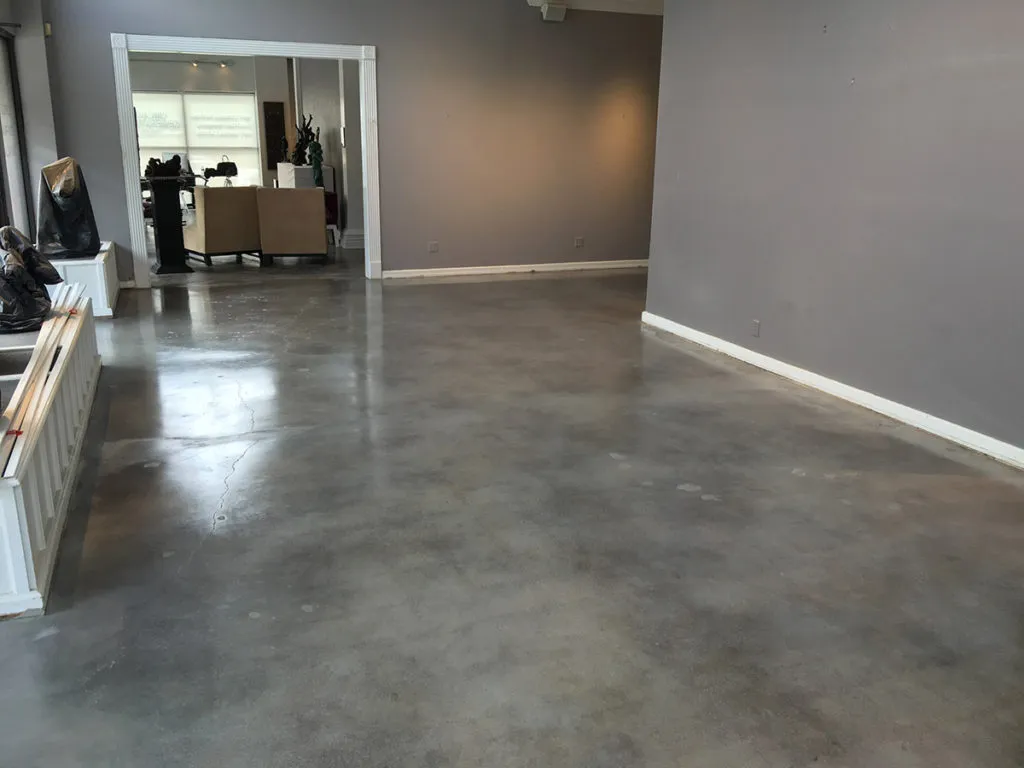
Why does my new concrete have dark and light patches?
Dark and light patches in the first weeks are mostly uneven drying. Shaded and damp areas stay darker for longer, and in Savannah humidity that can last a month or more. Lasting color differences come from loads that arrived at different times, water added on site, or uneven troweling. Wait about four weeks before judging. If it has not evened out, ask the contractor what can be done.
What happens if it rains on fresh concrete?
If it rains on fresh concrete in the first few hours, the surface can be washed out, pitted or weakened. After the surface has set, usually four to eight hours, rain does no harm and even helps curing. Summer storms here build quickly in the afternoon, so pours are planned for early morning and plastic sheeting should be on site. If rain hit your slab early, check for a soft, dusty or sandy top once it dries.
There are footprints, rough spots or low places in the finish. Is that acceptable?
No. Footprints, deep trowel marks and low places that hold water are finishing faults, not normal variation. A broom finish will never be perfectly even, but you should not see footprints or standing puddles. Small flaws can be ground or filled. A surface that is wavy all over may need a bonded overlay or a new pour, and that is a conversation to have before the last payment.
Are control joints really necessary? Mine are going to be saw-cut a week later.
Yes, control joints are necessary. They give the slab a planned line to crack along so the crack stays hidden and straight. A week later is too late. In warm weather joints should be saw-cut the same day or by the next morning, because the slab starts cracking wherever it wants within the first day. If your contractor plans to cut after a week, ask for tooled joints during finishing or an early cut instead.
I found out the slab was poured without rebar or mesh. Is that a problem?
It depends on what the contract said. Steel does not stop cracks. It holds the pieces tight and level after they crack. A patio or walk on a firm base can perform without it. A driveway on Savannah's soft or root-filled ground is better with it. If the quote listed rebar or mesh and the slab was poured without reinforcement, you did not get what you paid for and should raise it in writing.
My new stamped concrete is slippery. Can it be fixed?
Yes. Stamped concrete turns slippery when a glossy sealer is applied over a smooth pattern, and it is worse here because surfaces stay damp and grow mildew. The fix is to reseal with a grip additive mixed into the sealer, or to strip the gloss and use a low-sheen product. Near a pool or on a slope, ask for the additive from the start.
Why is my stamped concrete cloudy, fading or peeling?
A cloudy or white haze is almost always moisture trapped under the sealer. It happens when sealer goes on too thick, or over concrete that was still damp, which is easy to do in coastal humidity. Peeling has the same cause. Fading comes from sun wearing the sealer away. A haze can often be cleared by a contractor who re-dissolves the sealer with solvent. Peeling sealer has to be stripped and redone in dry weather.
The surface is flaking in its first year. Why?
Flaking in the first year usually means the top was weakened on pour day. Water added to the surface, finishing while water was still rising, rain at the wrong moment and fast drying all do it. In northern states the first winter is to blame. Here it is seldom frost. Report it in writing with photos, since it tends to spread.
My slab was poured in extreme heat and now it looks bad. What went wrong?
Concrete poured in extreme heat sets fast, and the crew can run out of time to finish it. The results are rough texture, fine cracks, cold joints between loads and a weak top. Good practice in a Savannah summer is to start at dawn, dampen the base, keep the crew large enough and begin curing straight away. If none of that was done, the contractor carries the risk for the result.
The stamped pattern is crooked and I still owe the final payment. Should I pay?
Talk before you pay the final balance. Put the problem in writing with photos and ask for a plan and a date. It is normal to hold back a fair amount for unfinished or faulty work until it is corrected, but check what your contract says about the final payment. A crooked or shallow pattern cannot be re-stamped once the concrete has set. Realistic remedies are a price reduction, an overlay or replacing the affected panels.
The crew left ruts, washout and splatter, the forms are still stuck on, and the pad is out of level. What now?
These are all cleanup and workmanship items the contractor should put right. Ruts in the lawn get filled and graded. Truck washout and splatter on the house, fence or street get removed. Forms normally come off within a day or two, and forms left for weeks become hard to remove and trap water. A pad that is out of level by more than the slope needed for drainage is a defect. A slight fall away from the house is intended. Measure with a long level, list everything in one message and ask for dates.
What can I do if the contractor will not come back to fix it?
If the contractor will not come back, send a dated written demand listing each problem and a deadline. For defects in a home, Georgia's Right to Repair Act, O.C.G.A. Section 8-2-35 and following, requires an owner to send written notice at least 90 days before filing suit, and gives the contractor 30 days to respond in writing. You can also file a complaint with the Georgia Attorney General's Consumer Protection Division, and smaller claims go to the Magistrate Court of your county. Ask a lawyer how the Act applies to outdoor flatwork. This is general information, not legal advice.
Call (912) 214-3834 if you want a second opinion on a new slab. We will tell you plainly what we see.