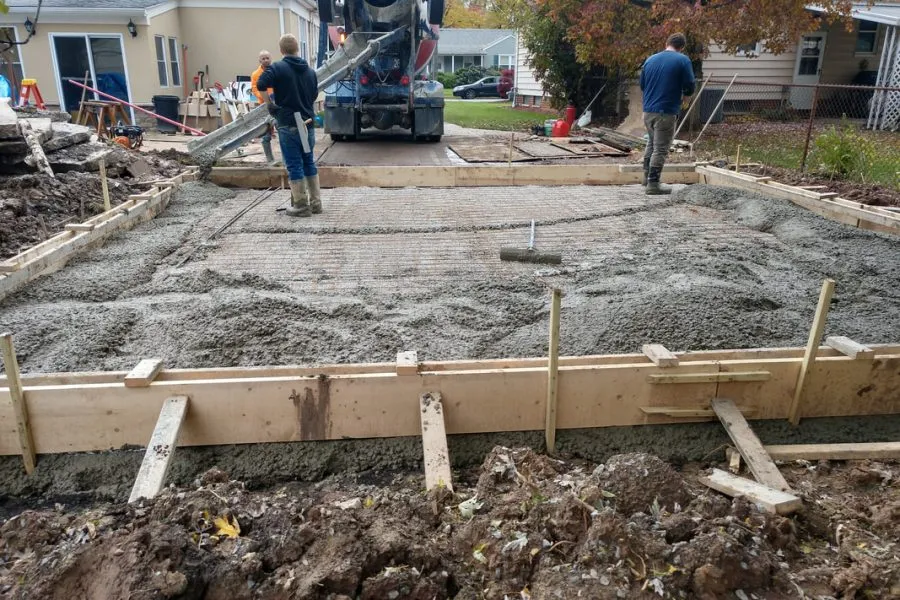
Concrete hardens in hours and keeps gaining strength for weeks. On the Georgia coast the calendar is set less by cold than by heat, afternoon storms and, from June through November, the tropics.
How long does concrete take to cure?
Concrete reaches most of its strength in the first week and its rated strength at about 28 days. Curing is not drying. Concrete hardens by a chemical reaction that needs water, so a slab kept damp or covered with curing compound ends up stronger than one left to bake. Savannah's humid air helps a little, but direct summer sun still dries the surface too fast.
How long before I can walk on new concrete?
You can walk on new concrete after about 24 to 48 hours. Keep dogs, bicycles and anything with small hard wheels off it for a few days, because the surface still marks easily. Do not drag furniture or grills across a new patio for the first week.
How long before I can drive on new concrete?
You can drive on new concrete with a car or pickup after about 7 days. Keep heavy vehicles such as moving trucks, loaded trailers, campers and delivery trucks off it for about 28 days. Stay away from the edges for the first weeks, since they are the weakest part of a young slab.
How long does it take to pour a driveway?
How long it takes to pour a driveway is usually one day for the pour itself, after one or two days of tear-out, grading, base work and forms. So most home driveways are three to four working days on site, then a week before you park on it. Permit time for the connection at the street comes before that and is outside our control.
| Stage | Typical time |
|---|---|
| Tear-out, base and forms | 1 to 2 days |
| Pour and finish | 1 day |
| Foot traffic | After 24 to 48 hours |
| Cars and pickups | After about 7 days |
| Heavy vehicles | After about 28 days |
Can concrete be poured in the rain?
Concrete should not be poured in the rain if the rain is heavy or will fall before the surface sets. Light drizzle on a covered, well-drained site can be managed. A downpour on a fresh surface washes out the cement and ruins the finish. From late spring to early fall, storms here tend to arrive in the afternoon, which is why we pour early and watch the radar.
Is it too hot to pour concrete in a Savannah summer?
It is not too hot to pour, but hot weather needs a plan. Above about 90 degrees the mix sets quickly and the top can dry and crack before finishing is done. We start at first light, dampen the base, keep the pour moving and begin curing as soon as the finish allows. A pour that starts at midday in August is asking for trouble.
Can concrete be poured in cold weather here?
Yes, nearly always. Freezing weather is uncommon in Savannah and seldom lasts. Fresh concrete must not freeze in its first day or two, so on the few nights when a freeze is forecast we cover the slab with blankets or move the pour. Cool winter days are actually easy on concrete, because it sets slowly and evenly.
What is the best time of year to pour?
The best time of year to pour in Savannah is fall through spring, roughly October to May. The air is cooler and drier and the afternoon storms are fewer. Summer pours work with early starts. From June through November a tropical storm in the forecast can delay a job by days, and we would sooner wait than pour ahead of one.
Can I use salt or deicer on new concrete?
Avoid salt and deicer on new concrete for its first year. You will hardly ever need it in Savannah, since ice is rare. If a freeze does come, use sand for grip. Salt of any kind is hard on concrete and on the steel inside it, which matters here because sea air already supplies some.
What should I do in the first week?
- Keep sprinklers from soaking one edge and leaving the rest dry.
- Leave the curing compound or cover alone.
- Keep cars, trailers and dumpsters off.
- Do not let downspouts dig out soil beside the new slab.
- Call us if you see anything that worries you.
Only a site visit gives a real price for your property. Estimates are free and come with a written quote. Call (912) 214-3834 or text us a photo of the area.